
 Safe Patient Handling
  Gold Rollboards
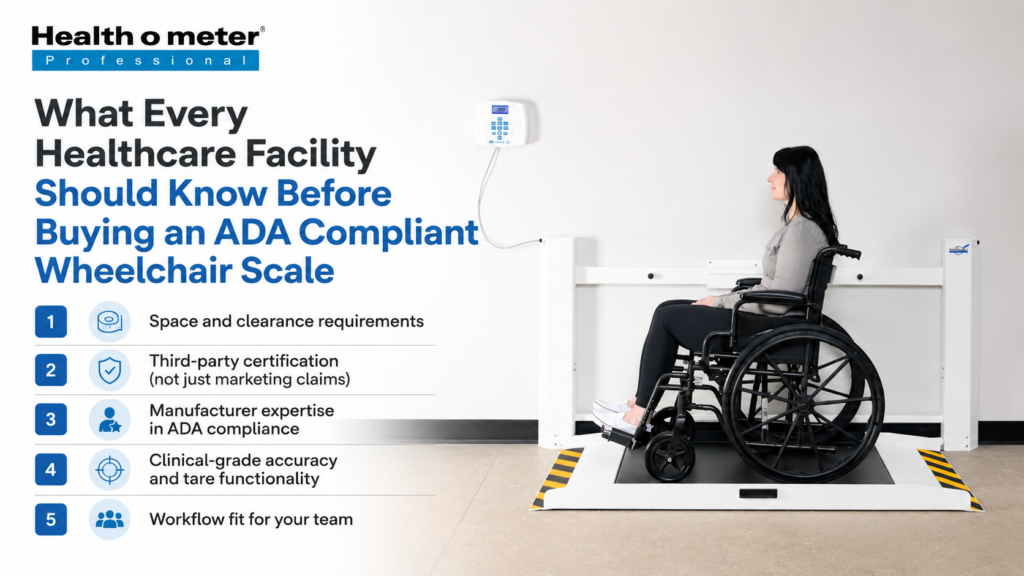
The compliance clock is ticking—here’s how to get it right
Accessible care starts long before a patient enters the exam room. For patients who rely on wheelchairs or have limited mobility, something as routine as being weighed can become a barrier—or even a safety risk—when the right equipment isn’t available.
ADA Medical Diagnostic Equipment (MDE) compliance deadlines are no longer on the horizon—they’re here. Healthcare facilities across the country are reassessing their equipment to ensure it meets current standards for accessibility and equitable patient care.
A properly spec’d ADA-compliant wheelchair scale does more than check a regulatory box. It supports patient dignity, reduces staff burden, and creates a more efficient clinical workflow—benefits that extend well beyond compliance.
Thinking about making the investment? Here are five key factors to evaluate before you buy.
First: Does Your Existing Equipment Still Make the Cut?
Here’s something many facilities don’t realize: a wheelchair scale purchased before 2024 may already be out of compliance—regardless of how well it still functions.
That year marked a turning point. The U.S. Access Board and federal agencies formally adopted updated MDE accessibility standards, introducing specific technical requirements for wheelchair scales and other diagnostic equipment used in clinical settings. These aren’t aspirational guidelines—they carry the weight of enforceable law, complete with compliance deadlines.
The practical takeaway: “good enough” equipment from a few years ago may not be good enough today. Understanding what the current standards actually require is the essential first step—before comparing products, vendors, or price points.
1. Don’t Underestimate How Much Space You’ll Need
Floor space is one of the most overlooked variables in wheelchair scale selection. ADA-compliant scales must provide enough room for safe approach, stable positioning, and unobstructed exit—requirements that translate directly into square footage.
General platform minimums to plan around:
- Width: at least 36 inches (32 inches if platform height is under 4”)
- Depth: at least 40 inches
In practice, many scales have a much larger footprint—often around 77” wide x 43” deep once ramps and approach clearance are factored in. Think roughly the footprint of a large conference table. Beyond the platform itself, the surrounding area needs adequate turning space for wheelchairs, scooters, and walkers.
Space-constrained? A wall-mounted, fold-down wheelchair scale can be a practical solution—offering full accessibility when in use without permanently consuming floor space.
2. “ADA-Friendly” Is Not the Same as ADA-Certified
The marketplace is full of scales marketed as accessible—but marketing language and verified compliance are two very different things. Third-party certification is the only way to confirm a scale actually meets ADA and MDE standards, not just claims to.
What certified compliance delivers:
- Independent verification against current ADA and MDE technical standards
- A defensible position if your facility faces a discrimination claim or regulatory review
- Documentation you can present with confidence during audits or inspections
Relying on a vendor’s self-reported compliance puts your facility at risk. Certification shifts the burden of proof—and that distinction matters when the stakes involve both patient rights and legal exposure.
3. Your Vendor Should Be an ADA Expert, Not Just a Seller
ADA and MDE requirements are detailed, technical, and subject to change. A vendor who simply stocks accessible-looking equipment is not the same as a manufacturer with deep expertise in compliance—and that difference shows up when things get complicated.
A compliance-focused manufacturer brings more to the table:
- Clarity on which ADA and MDE requirements apply to your specific situation
- Practical input on how your facility’s layout and workflows affect equipment selection
- Guidance on the right scale type, weight capacity, and configuration for your needs
- Compliance documentation that holds up under scrutiny
The right partner helps you avoid costly missteps—both at the time of purchase and down the road as standards continue to evolve.
4. Clinical Performance Can’t Be an Afterthought
Compliance matters—but so does clinical utility. A wheelchair scale that meets accessibility standards but falls short on performance can still compromise patient care. Weight data drives decisions in medication dosing, dialysis management, oncology, cardiac care, and more, so accuracy isn’t negotiable.
Performance features worth prioritizing:
- Sufficient weight capacity to serve bariatric patients
- Wheelchair tare functionality to isolate the patient’s weight from the chair’s
- Non-slip, stable platform surfaces that support safe patient positioning
The goal is a scale that advances both compliance and care—not one that forces you to choose between them.
5. The Best Scale Is One Your Team Will Actually Use
Even the most technically compliant scale creates problems if it disrupts how your team works. The right equipment should reduce friction in daily operations—not introduce it.
Look for a scale that:
- Lets staff weigh patients where they already are, avoiding unnecessary transfers or repositioning
- Enables fast, consistent weigh-ins with minimal setup time
- Supports a standardized process that any staff member can follow reliably
- Keeps intake and triage moving without creating bottlenecks
When the weighing process is smooth for staff, the experience is better for patients—faster, more dignified, and less disruptive to an already demanding visit.
The Bottom Line
ADA and MDE compliance isn’t a future consideration—it’s a present one. Facilities that act now are better positioned to meet regulatory expectations, reduce legal exposure, and deliver the standard of care their patients deserve.
Choosing the right wheelchair scale means thinking beyond the price tag. Space, certification, manufacturer expertise, clinical performance, and workflow fit all play a role. Get those five things right, and you’ll have an investment that holds up—today and as expectations continue to rise.
Schedule your complimentary ADA scale consultation today, or visit /ada-mde for more information.