
 Safe Patient Handling
  Gold Rollboards
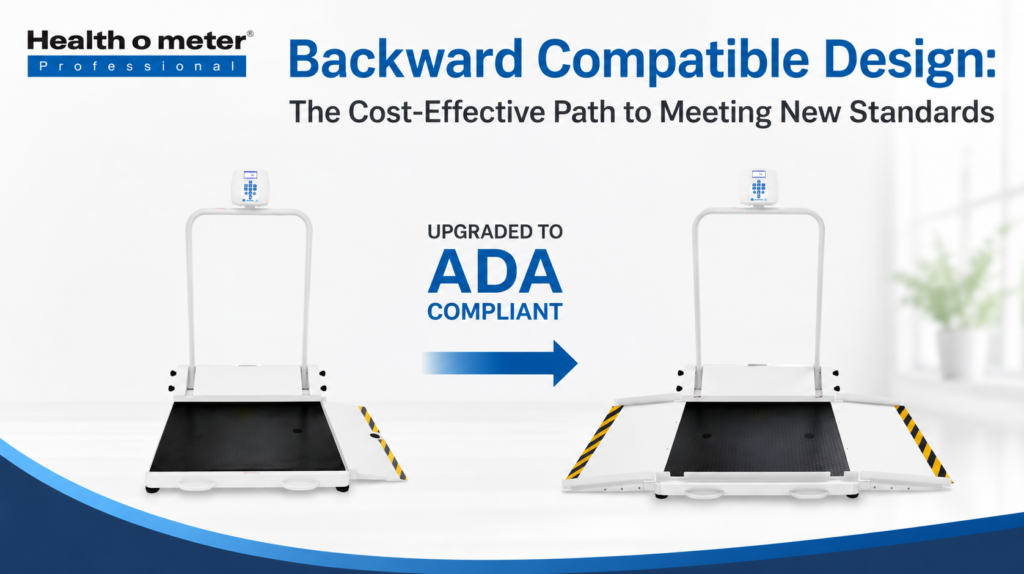
When regulations change, replacing an entire fleet of equipment isn't the only option, backward compatible upgrade kits can bring existing products into compliance at a fraction of the cost.
What Is Backward Compatible Design?
“Backward compatible” is a phrase most commonly associated with technology, describing a system's or device's ability to remain functional with earlier versions of itself. But the concept applies just as well to mechanical components. In that context, backward compatible design means creating modification kits that let users repair, upgrade, or enhance equipment they already own, rather than replacing it outright. These kits can extend equipment lifespans, preserve initial hardware investments, and eliminate the cost of a full overhaul.
Backward compatible design is especially valuable when regulations change and existing equipment no longer meets a new standard. In the auto industry, for example, retrofit kits have been designed to upgrade older diesel engines to meet today's emission standards. The new parts simply replace the old ones in the same location, saving the cost and hassle of a full engine replacement. This same logic applies well beyond the auto industry — including, notably, in healthcare.
Why It Matters in Healthcare
The U.S. Access Board recently published new standards for medical diagnostic equipment (MDE), such as examination chairs, weight scales, and mammography equipment. As a result, healthcare providers need equipment that meets the new MDE standards — but replacing an entire facility's equipment to get there can be very costly.
Medical equipment manufacturers that offer backward compatible upgrade kits give healthcare facilities an efficient, budget-friendly way to modernize existing equipment without disrupting current workflows. Modifying existing equipment also eliminates the need to retrain staff on a new supplier's products.
Retrofit kits can do more than bring equipment into compliance, they can also expand what that equipment is capable of. For example, adding a handrail to a piece of equipment originally designed for seated patients allows it to safely accommodate ambulatory patients as well.
Health o meter® Professional Scales' Upgrade Kits
Health o meter® Professional Scales treats backward compatibility as a core part of its design philosophy, developing upgrade kits that work with scales already in the field. In response to the U.S. Access Board's new MDE standards, the company designed retrofit kits that are backward compatible with its existing 2600KL and 2610KL series wheelchair scales:
- 2600ADAKIT / 2600ADAKIT-WHITE — brings 2600KL and 2610KL series wheelchair scales into compliance with the new MDE standards, with no need to purchase a new scale.
- 2622ADAKIT — brings 2600KL and 2610KL series wheelchair scales into compliance with the new MDE standards as an ADA-compliant stand-on scale and wheelchair scale, with no need to purchase a new scale.
- 2622HB — available for 2620KL series wheelchair scales, this kit adds an ADA-compliant handrail, expanding the scale's use to both wheelchair and stand-on patients.
Both upgrade kits are reviewed for ADA compliance and Platinum certified by Corada, giving facilities added confidence that their retrofitted equipment meets the required standard.
With a backward compatible ADA compliance kit, facilities can meet the new MDE standards while preserving their initial scale investment and avoiding a costly overhaul.
Ready to Bring Your Scales Into Compliance?
Contact Health o meter® Professional Scales today to find out if your facility's equipment can be upgraded:
- Call: 1-800-815-6615
- Email: homproducts@homscales.com
- Visit: /ada-mde/