
 Safe Patient Handling
  Gold Rollboards
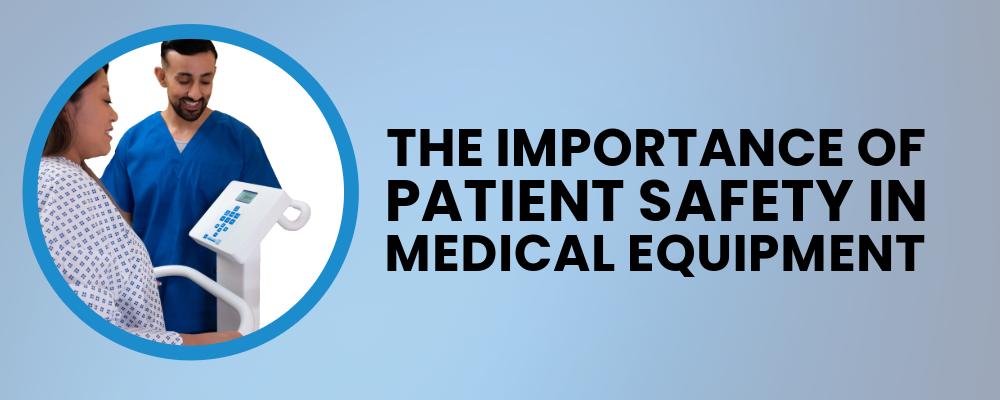
Healthcare facilities’ purpose is to provide accurate diagnoses and effective treatments for their patients and while doing so they need to ensure patient safety. Utilizing medical equipment that has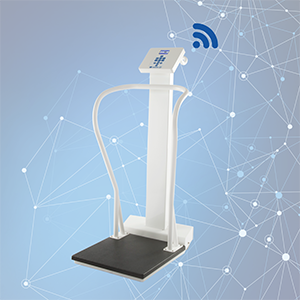 been designed with patient safety features can help facilities meet these goals.
Medical equipment needs to provide accurate patient information so practitioners can determine effective treatments. Accurate patient information could mean weight data measured in a specific unit, measurements coming from a calibrated piece of equipment, or information that was electronically sent to the patient record from a device. Medical equipment that supports these qualities can significantly improve patient safety efforts. For example, a scale that measures in Kilograms only can prevent a dosing error that was incorrectly based on a pounds measurement. Or a device that has the capability to send data to an EMR system or vital signs monitor reduces the risk of manual transcription errors.
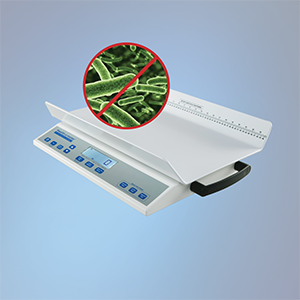 Keeping patients safe also includes protecting them against healthcare acquired infections (HAI). Equipment that is designed to have minimal places for germs to collect minimizes the chance of patient exposure and allows for easier sanitizing. Another tool in the fight against HAIs is antimicrobial surfaces, which can suppress the growth of microorganisms and limit the transmission of harmful microbes. Equipment that features antimicrobial powder coatings help reduce patient and staff exposure to various bacteria and viruses.
Patients with mobility challenges need extra attention to keep them safe within a medical setting. Equipment that supports fragile patients can help staff utilize the equipment with the patient and minimize the risk of injury. If the equipment requires a patient to step onto a platform it should feature incorporated handrails for stability and a low platform height reducing the risk of tripping for patients with limited ability to lift their legs. Facilities should consider using certified ADA compliant products that meet the U.S. Access Board’s standards for safe and accessible diagnostic equipment. For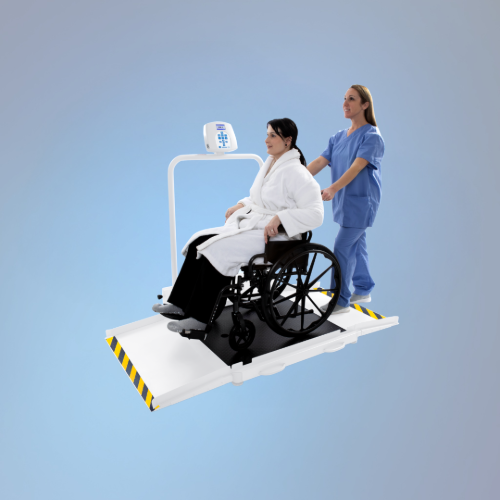 example, ADA compliant wheelchair scales feature several required safety elements such as 2” edge protection on the platform and ramps as well as a 1:8 gentle ramp slope. These features protect patients by keeping wheelchairs aligned, preventing roll‑offs, and ensuring safer, easier access to the scale.
Lastly, facilities should look for equipment from manufacturers that are ISO certified. ISO quality systems include strict quality standards that include accuracy and durability testing, as well as risk assessment for patient safety. If you’re interested in learning more about how our products help keep patients safe, please contact us at 1-800-815-6615 or homprocs@homscales.com.